
Building the Future
Local Participation. National Growth.
AIDE grows through a district-first model focused on strengthening local capability, economic opportunity, and community involvement.
Rather than building large central structures first, the ecosystem grows through practical collaboration between municipalities, communities, educators, businesses, and infrastructure partners working together around shared local priorities.
District Chapters form the foundation of the broader AIDE ecosystem, helping connect people more meaningfully to the changing economy and the systems shaping it.
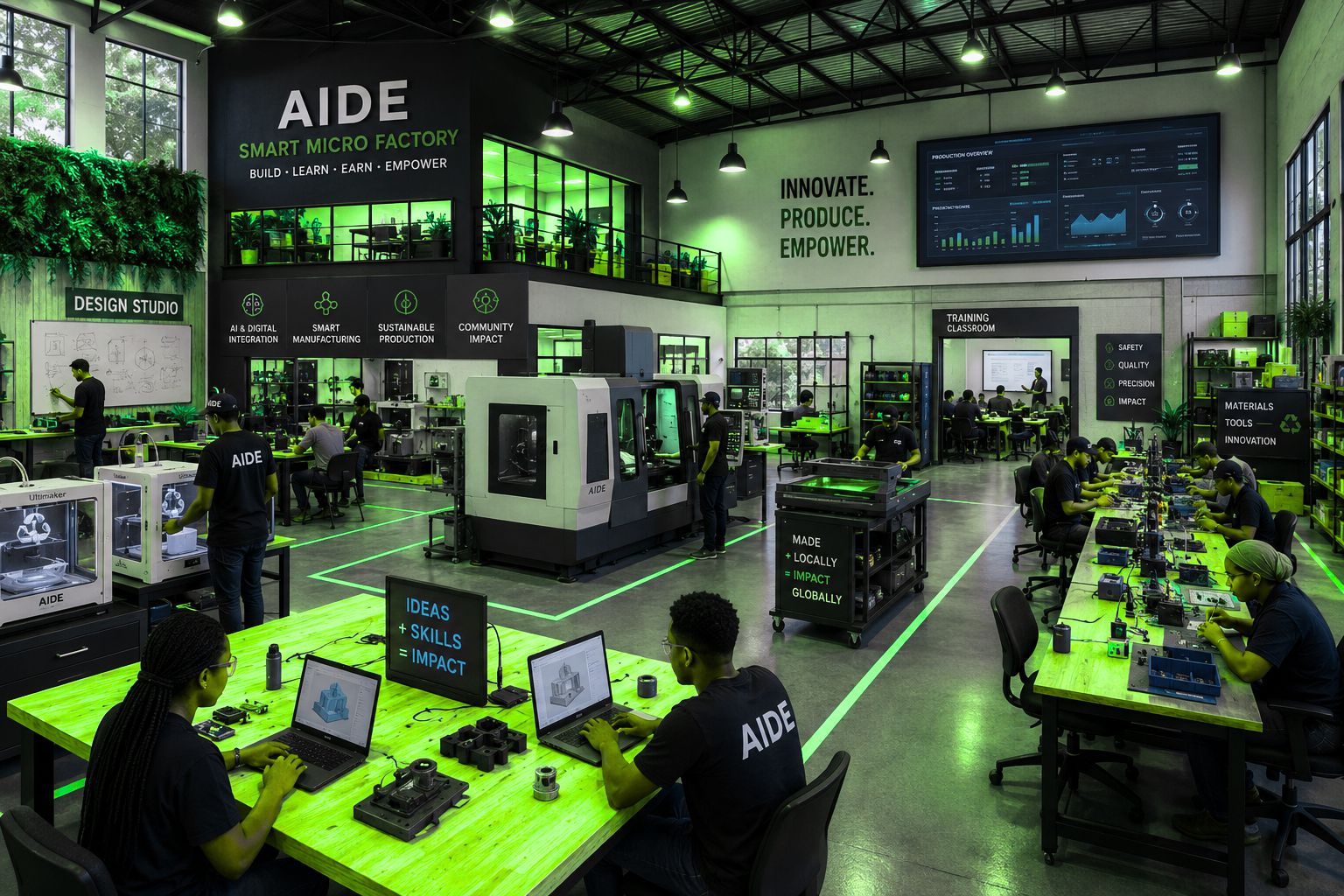
Where Human Infrastructure Comes to Life
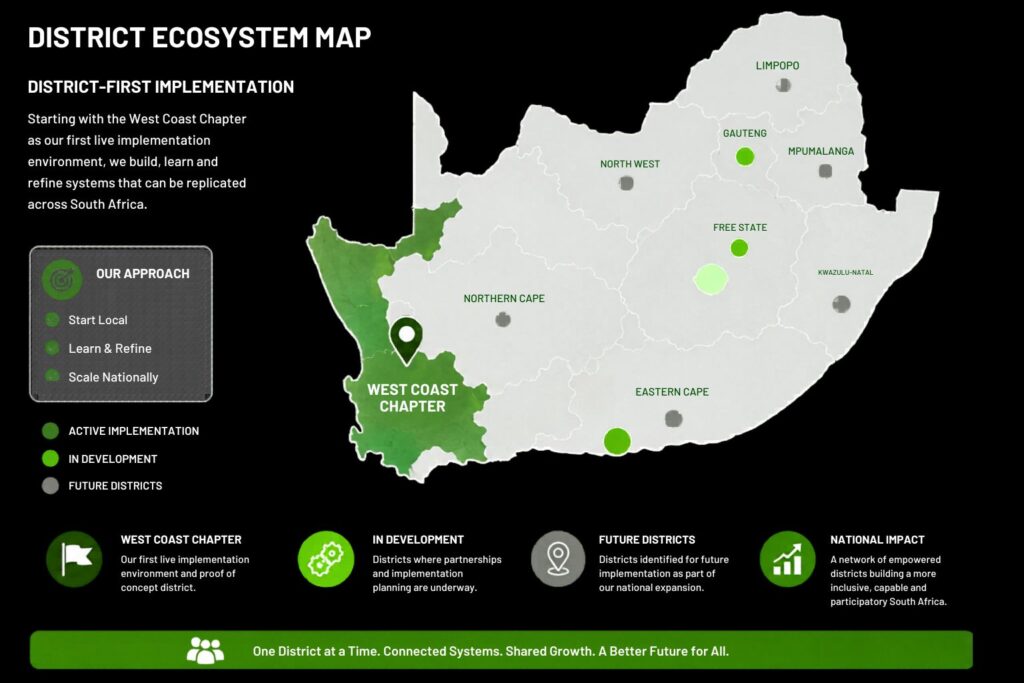
The West Coast Chapter is the first live district ecosystem within the AIDE network.
The region is becoming a real-world environment where communities, infrastructure, technology, and local economic activity connect through practical collaboration.
The focus is not only digital transformation.
The focus is helping people participate directly in the systems shaping the future economy.
This includes opportunities connected to:
- smart device assembly,
- AI-enabled infrastructure,
- automated irrigation systems,
- smart poles and connected infrastructure,
- digital public services,
- local manufacturing,
- renewable support systems,
- and future workforce development.
Digital Artisans may help build and support technologies such as:
- smart monitoring systems,
- environmental sensors,
- connected infrastructure devices,
- facial recognition access systems,
- and digitally connected community infrastructure.
These activities connect learning directly to local contribution, production, and economic opportunity.
The West Coast continues helping shape the broader AIDE ecosystem through practical collaboration, local partnerships, and shared learning.


Real Change Happens Locally
Strong local ecosystems are built through trusted relationships, collaboration, and ongoing community engagement.
That is why AIDE focuses on districts.
District Chapters help bring together municipalities, local businesses, educators, infrastructure partners, communities, and implementation teams around shared local development goals.
The district-first approach keeps the ecosystem practical, collaborative, and connected to local realities rather than distant administration.
Connecting Local Systems
Each District Chapter acts as a shared ecosystem where learning, infrastructure, enterprise, workforce development, and local opportunity become more connected over time.
Depending on regional priorities, district collaboration may support:
- smart municipal initiatives,
- infrastructure support,
- agriculture and food systems,
- local enterprise,
- renewable energy initiatives,
- digital public services,
- youth development programmes,
- and community participation hubs.
This creates practical opportunities for people to:
- build technical and digital capability,
- contribute to local systems,
- gain real-world experience,
- and participate in economic activity connected to their communities.

Connected Districts. Shared Learning.
The long-term vision is to support a growing network of District AIDE Chapters across South Africa.
As additional districts emerge, the ecosystem becomes increasingly connected through:
collaboration,
shared learning,
local innovation,
digital readiness,
workforce development,
and practical implementation experience.
Each district strengthens the broader ecosystem while remaining grounded in local priorities and regional realities.
The goal is not expansion for its own sake.
The goal is to help build connected regional ecosystems capable of supporting long-term resilience, local capability, and meaningful economic participation.

Real Systems. Real Communities.
District ecosystems create practical opportunities for communities to participate directly in local economic and infrastructure activity.
Depending on regional priorities, this may include:
- smart infrastructure projects,
- food and agriculture systems,
- renewable energy participation,
- local manufacturing and repair,
- smart monitoring systems,
- digital governance support,
- connected public systems,
- and community enterprise activity.
These environments help communities move from passive observation to active involvement within the systems shaping the future economy.
Participation becomes practical, local, and economically meaningful.
Connected Districts. Shared Participation.
District Chapters are not isolated projects.
They form part of a broader Human Infrastructure ecosystem designed to strengthen:
- local capability,
- digital readiness,
- municipal collaboration,
- economic opportunity,
- and long-term community resilience.
The ecosystem grows through collaboration, shared learning, and practical local activity.

Be Part of South Africa’s Smart Future
Building the Future From the Ground Up
South Africa’s future economy will be shaped not only by national systems, but by strong local ecosystems capable of connecting people meaningfully to infrastructure, technology, governance, and economic opportunity.
Smart Infrastructure requires Human Infrastructure.