






VISION

THE

Building Participation for the Future Economy

South Africa is entering a period of major technological, economic, and infrastructure transformation. Public services are digitising. Infrastructure systems are becoming smarter. Artificial intelligence is reshaping how people work, learn, and participate in the economy.

At the same time, many communities remain disconnected from the systems shaping the future.

The Vision of AIDE exists to help bridge that gap. The objective is not only technological advancement. The objective is meaningful participation.

the vision
Why AIDE was created in response to a growing reality:

The future economy is changing faster than many communities are able to participate in it.

As technology, infrastructure, and digital systems evolve, there is growing need for practical ways to help people adapt, build capability, and connect to opportunity.

AIDE focuses on bringing together:

  • people,
  • municipalities,
  • infrastructure,
  • education,
  • local economies,
  • and emerging digital systems

into connected ecosystems where participation can grow through real collaboration and activity.

AIDE is not designed as a traditional programme or isolated initiative.

It is designed as a growing Human Infrastructure ecosystem.

WHAT IS HUMAN

Smart Infrastructure requires Human Infrastructure

Infrastructure alone does not create inclusion.

Technology alone does not create opportunity.

Digital systems alone do not guarantee participation.

For transformation to create meaningful local opportunity, communities also need:

  • local capability,
  • coordination,
  • access to participation,
  • and stronger connections to the systems shaping the future economy.

AIDE defines this missing layer as Human Infrastructure.

Human Infrastructure connects people, infrastructure, municipalities, governance, local economies, and future workforce capability into practical ecosystems where communities can participate more meaningfully in economic and technological change.

WHY THIS

The Future Economy Is Already Emerging

South Africa’s economy is already being reshaped by:

  • digital transformation,
  • smart infrastructure,
  • automation,
  • connected public services,
  • and AI-assisted systems.

Government is increasingly investing in Digital Public Infrastructure and future-ready public systems designed to modernise service delivery and economic participation.

But technology alone cannot solve participation challenges.

Without stronger local participation:

  • digital inequality can deepen,
  • communities can become disconnected,
  • and opportunity can remain inaccessible to many people.

The future economy will depend not only on technology, but on whether people are able to participate meaningfully within the systems shaping that future.

HOW AIDE WORKS

A District-Based Ecosystem

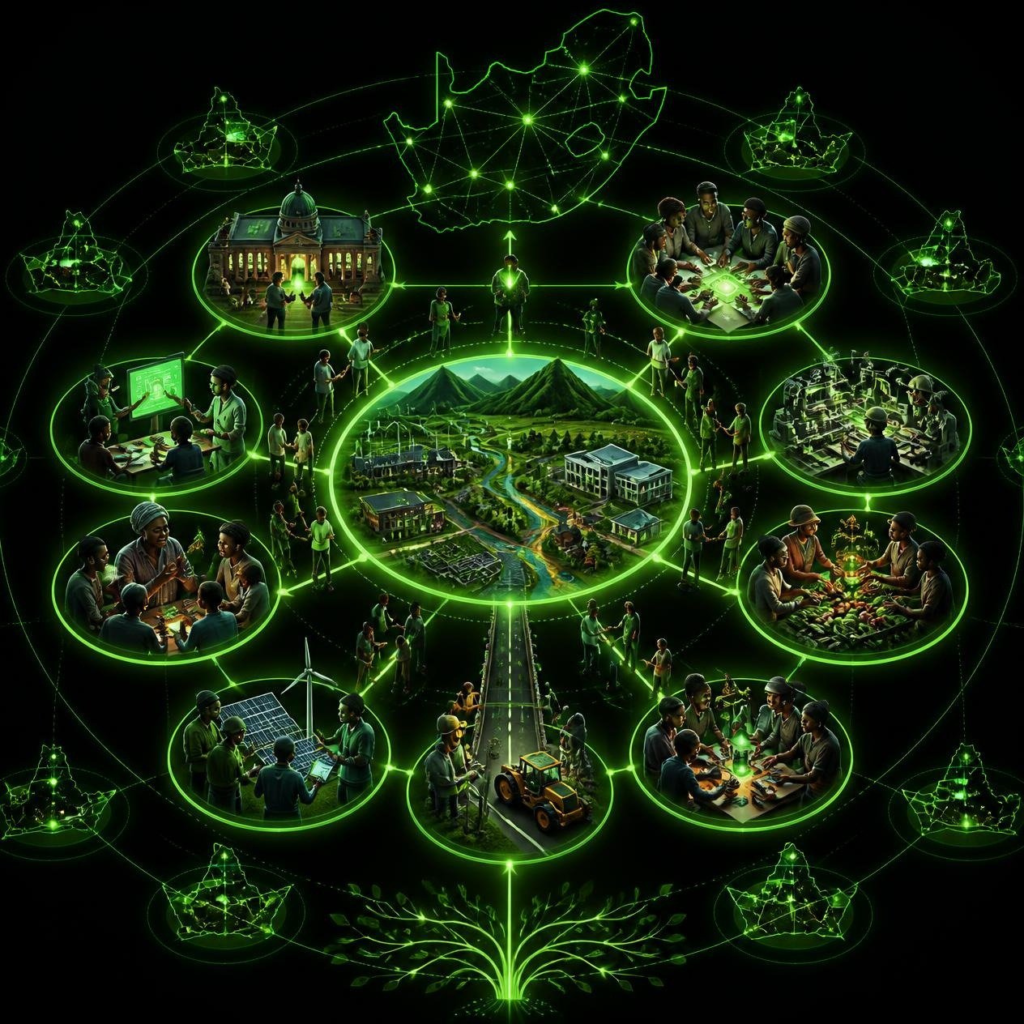
AIDE grows through District Chapters where municipalities, communities, educators, industry, local businesses, and implementation partners work together to strengthen participation and economic opportunity at regional level.

Rather than separating learning, production, governance, infrastructure, and enterprise into isolated systems, AIDE connects them into practical local ecosystems where people can:

  • learn,
  • contribute,
  • build capability,
  • and participate in economic activity.

The national ecosystem grows through practical district collaboration and shared implementation.

Helping People Participate in the Future Economy

AIDE supports a growing set of Human Infrastructure Pipelines designed to help people participate in a changing world shaped by digital technology, smart infrastructure, artificial intelligence, and new forms of economic activity.

The Digital Artisan Pipeline focuses on local production, infrastructure support, enterprise participation, and community-based economic activity.

The Digital Public Systems Pipeline focuses on digital governance, municipal capability, AI-assisted administration, and digitally enabled public services.

The Technical Infrastructure Pipeline supports smart infrastructure, renewable systems, monitoring systems, maintenance coordination, and local technical capability.

Together, these pipelines help connect people, skills, infrastructure, and economic opportunity.

Where Learning Connects to Opportunity

AIDE supports practical environments where participation connects directly to infrastructure, local economies, and real-world activity.

These ecosystems may include:

  • smart municipal systems,
  • agriculture and food systems,
  • digital governance,
  • smart infrastructure,
  • production environments,
  • blue economy systems,
  • and community participation hubs.

The objective is to create environments where learning becomes participation, participation builds capability, and capability connects to economic opportunity.

SMART MICRO-FACTORIES

Local Production for the Future Economy

AIDE supports the development of Smart Micro-Factories and Participation Hubs as shared local spaces for production, collaboration, and economic participation.

These environments may support manufacturing, repair, food systems, logistics, digital services, enterprise incubation, and smart systems assembly connected directly to community participation and local economic activity.

The objective is to strengthen practical local economies while building future workforce capability.

Smart Learning Microfactory

BUILDING THE FUTURE TOGETHER

Connected Systems. Shared Participation.

AIDE is not designed to operate as an isolated programme.

It is designed as a connected ecosystem that brings together municipalities, communities, educators, industry, technologists, implementation partners, and local economies through practical collaboration.

The objective is not short-term activity.

The objective is to help build long-term participation, local capability, digital readiness, and community resilience.

Human Infrastructure for South Africa’s Digital Transformation Era

As South Africa continues investing in digital transformation, smart infrastructure, and future-ready public systems, participation will become increasingly important.

AIDE exists to help ensure that communities are not left outside the systems shaping the future economy, but become active participants within them.

Smart Infrastructure requires Human Infrastructure.

Meet the Team

AIDE are innovators, strategists, and builders committed to shaping South Africa’s digital future. The Aizatron Institute for Digital Excellence team blends industry expertise with hands-on experience to guide the next generation of creators, makers, and change-makers.

Aizatron Institute for Digital Excellence is Driven by purpose, powered by technology, and united by impact, we’re here to unlock potential and launch what’s next.

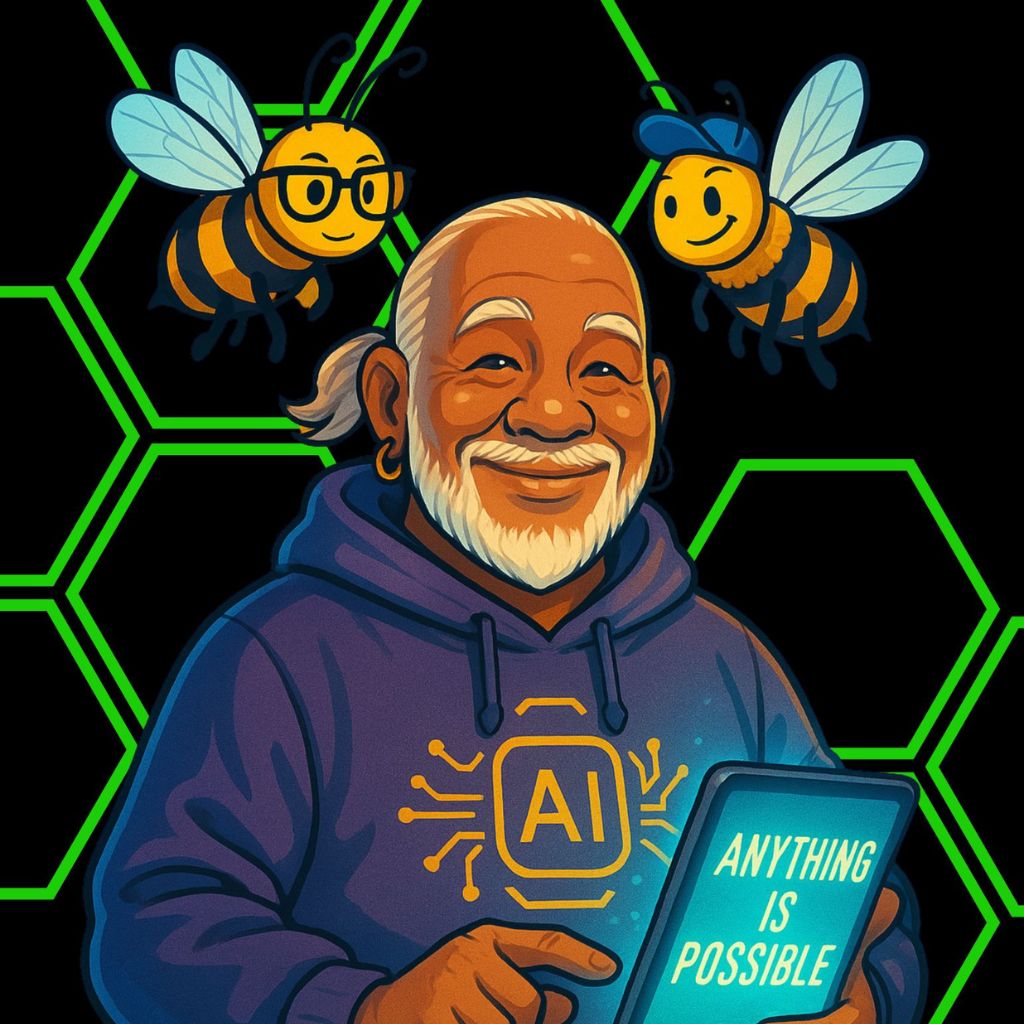
Paul Davids & Bra AI

Founder and CEO

BRA Ai & HIS BEES

Voice, Mentor, Mischief

Senisha Moonsamy

Network Builder, Partnership Architect & Fundraising Strategist

Ntando Mniki

Director | Executive Management Team, AIDE Initiative NPC

Keenan Hector

Head of Technology and Development

Ariel Lawrence

Head of Support Services, AIDE

Evelene Bester

Digital Queen Bee - Head of Creative

Our Board

AIDE is backed by visionary leaders who bring big-picture strategy, cross-industry expertise, and a shared drive to build an inclusive digital future.

Lavina Ramkissoon

Meet #aiMOM Chairperson of AIDE Board

Henry McGregor

AIDE Board Member

Renée Marx

Senior Fellow of the Higher Education Academy

Paul Cockburn

Writer, Editor & Strategic Communications Advisor
Anthea

Non-Executive Board Member

Eugene Brandt

Board Member | AIDE

Bra Albeit

Silent Board Member & Full-Time Reality Bender

Be Part of South Africa’s Smart Future

Whether you’re a student, teacher, entrepreneur, or policy maker, there’s a place for you in the AIDE ecosystem.
Let’s turn today’s learners into tomorrow’s innovators.

Contact Form Demo