

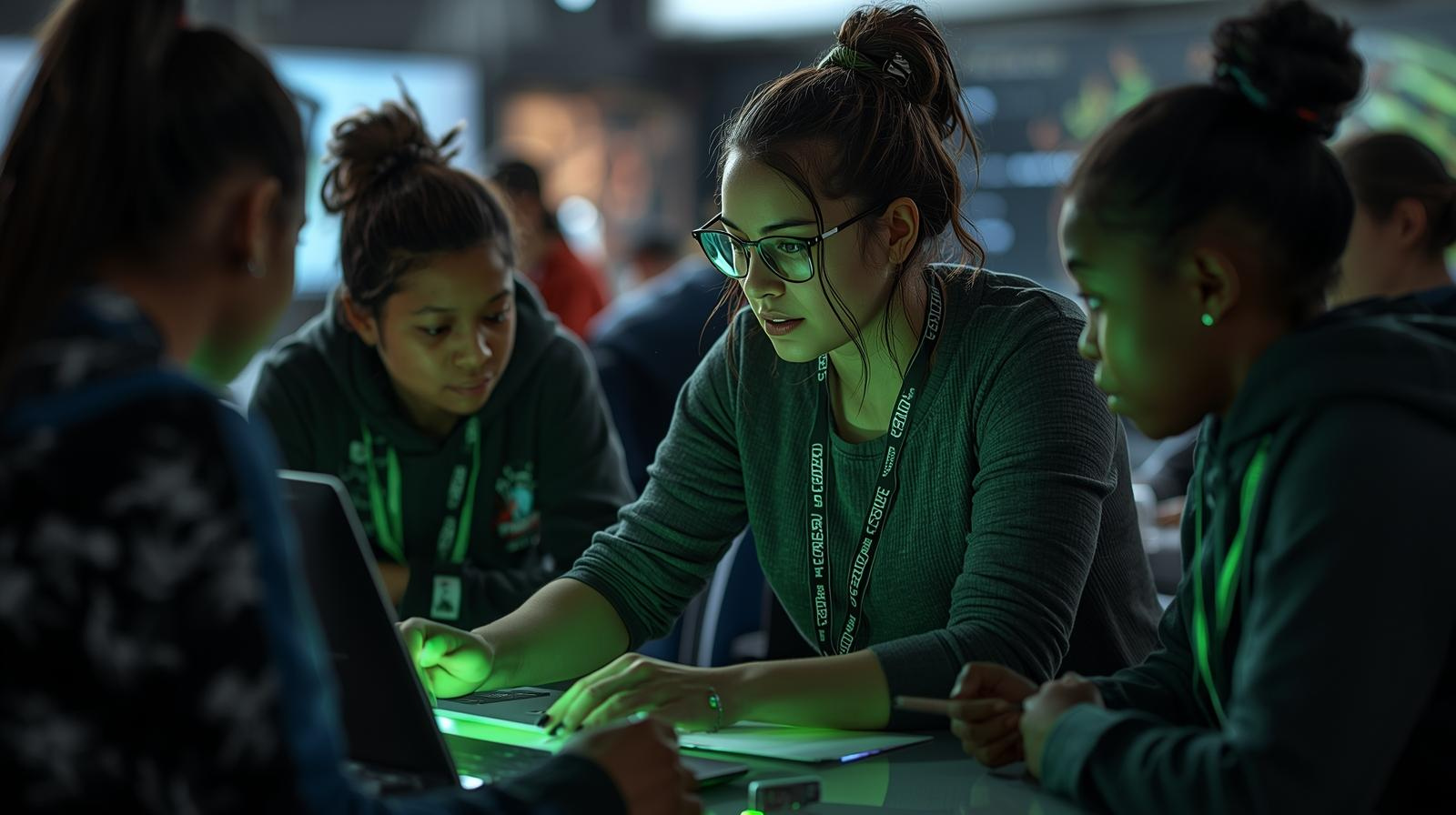
A Future-Ready Skills Ecosystem, Built Into the System South Africa Already Owns:
digital artisan training
South Africa already spends billions every year on the full learning journey of every child from early childhood centres to primary school, high school, TVET, university, and eventually the workforce. This entire taxpayer-funded ecosystem is meant to prepare young people for the world ahead.
But the world has changed far faster than the system has.
Today’s economy is AI-driven, digital, creative, global, and fast-moving, yet our education and training models still rely on old structures, old buildings, old methods, and expensive programmes that produce low outcomes at high cost.
At the same time, too many young people are locked out by barriers we already know too well:
- high training fees
- distant campuses
- long commutes
- certificates families cannot afford
- training centres built far from where young people live
It doesn’t have to be this way.
Digital artisan training if intergrated will help South Africa build a capable, future-ready workforce without spending billions on new training centres, new buildings, long courses, or traditional education pipelines that no longer work.
Instead, digital artisan training will activate the system we already have, our schools, our YES Hubs, our community halls, our libraries, our youth, and the existing national learning cycle.
South Africa already has the infrastructure.
South Africa already has the learners.
South Africa already has the demand.
Digital artisan training simply switches the whole system on.
Why South Africa Must Rethink Skills Development
For decades, South Africa’s skills development model has relied on one assumption:
“To train youth, we must build new centres, hire large staff teams, and run long, expensive programmes.”
This assumption is precisely why traditional training costs spiral to:
- R20,000–R70,000 per learner (bootcamps)
- R12,000–R25,000 (traditional programmes)
- ±R30,000 (TVET programmes)
And after all that spending?
Too many young people still struggle to find employment.
Digital artisan training will change everything.
It will deliver:
- practical capability
- enterprise readiness
- digital creativity
- innovation skills
- real portfolio outputs
- community-based experience
…at R5,300 per youth.
Not because the programme is cheap but because the model is intelligent.
Digital artisan training removes the unnecessary layers that drive up the cost of skills development and replaces them with high-impact, AI-enabled, community-rooted learning.
The AIDE Ecosystem: A National Talent Cycle.
Unlike traditional training, digital artisan training does not exist in isolation. It fits into the AIDE Learning Collective a national talent cycle that strengthens early childhood, schooling, post-school pathways, and community innovation.
Home — Early Awareness
Digital exposure starts at home. Parents receive support and tools that make digital curiosity natural and playful.
Kindergarten & Primary — Digital Foundations
Children engage creativity, basic coding logic, storytelling, AI awareness, and digital play.
High School — Exploration & Early Innovation
Learners prototype solutions, explore creative skills, and begin early versions of digital artisan training — content creation, basic AI workflows, community problem-solving.
Post-School — Full Digital Artisan Training
Youth develop hands-on production skills, digital portfolios, enterprise activation, and AI-assisted creativity.
Workforce — Immediate Contribution
Digital Artisans enter the labour market able to contribute immediately because they learned through real practice, not theory alone.
Community — Innovation Loops Back
Graduates bring micro-services, digital products, and new enterprises to their communities, strengthening the entire system.
This cycle makes digital artisan training a national capability engine rather than a short course.
Using What We Already Have: The Infrastructure Advantage
South Africa’s greatest untapped resource is not money it is existing infrastructure.
We already have:
- 25,000+ schools
- YES Hubs in every province
- community halls
- libraries
- municipal buildings
The problem has never been infrastructure.
The problem has been activation.
Digital artisan training transforms these spaces into digital capability hubs with minimal upgrades, dramatically lowering the cost of national skills development.
Let’s break it down.
YES Hubs: Proof That Upgrading Works
YES Hubs across South Africa have already proven:
- creative refurbished spaces work
- retrofitted rooms make excellent digital training zones
- youth can produce world-class work without fancy buildings
This aligns perfectly with digital artisan training, which amplifies YES Hubs by adding:
- AI-powered modules
- digital production workflows
- enterprise activation
- school + community project pipelines
- local business integration
In this model, YES Hubs evolve from training halls into community innovation engines — places where youth create solutions, launch micro-enterprises, and build portfolios that lead to real careers.
Schools Become Digital Artisan Training Camps
Schools are the most distributed infrastructure in South Africa and digital artisan training fully leverages them.
Instead of forcing youth to travel to distant centres, digital artisan training brings capability into:
- their community school
- their existing classrooms
- their familiar environment
- their teacher networks
This transforms the learning experience:
It reduces:
- travel cost
- dropout rates
- safety risks
- emotional barriers
- financial strain
It increases:
- engagement
- attendance
- participation
- community ownership
- family support
Every school becomes a local digital training camp without building anything new.
Communities Become a National Training Network
Traditional models centralise training in expensive urban campuses.
Digital artisan training decentralises everything.
With the AIDE Learning Collective:
- every community becomes a training site
- every school becomes an activation point
- every YES Hub becomes an innovation node
- every learner becomes a potential digital creator
This is how South Africa builds a national network without building anything new.
And this is why digital artisan training maintains such a low cost per learner while delivering high capability.
Why Digital Artisan Training Costs So Little
The savings happen because the model removes the biggest cost drivers:
- new buildings
- extensive full-time staff
- long, theory-heavy programmes
- expensive logistics
- long-distance transport
Digital artisan training replaces these with:
- existing infrastructure
- AI-assisted facilitation
- shorter, high-impact modules
- localised learning
- community-based implementation
- smarter systems instead of cement
The result:
- high capability output
- low national cost
- infinite scalability
Digital artisan training is redefining what affordable transformation looks like.
A National Digital Artisan Grid
When schools, YES Hubs, and communities are connected through digital artisan training, South Africa gains:
A fully distributed National Digital Artisan Grid.
This grid:
- reaches every township
- reaches every rural village
- reaches informal settlements
- gives youth opportunities where they live
- develops creators instead of consumers
- strengthens community enterprise
- feeds the local economy
And it does all of this without new infrastructure investment.
A Message for Leaders & Policymakers
Here is a smooth, powerful continuation of that line — expanded to include teachers, principals, community leaders, councillors, and unemployed volunteers as essential partners in the new model.
You can drop this directly into your blog, homepage, or presentation.
The old belief was:
“To upskill youth, we need new buildings, big institutions, and expensive programmes.”
But the new truth is far more powerful:
South Africa already has the people who make learning possible —
not just classrooms and buildings, but the human infrastructure that has been serving communities for decades.
We have the teachers who know their learners by name.
We have the principals who understand their communities.
We have the community leaders and councillors who see local needs every day.
We have thousands of unemployed youth and volunteers who want to contribute but lack a meaningful pathway.
Digital Artisan Training activates all of them.
A New Way Forward: Everyone Becomes a Capability Builder
Teachers
Don’t need to become tech experts.
With AI-assisted modules, they become facilitators, guiding learners through hands-on digital creation.
Principals
Become ecosystem champions, turning their schools into local digital capability hubs that serve the entire community.
Community Leaders & Councillors
Provide the local insight, trust networks, and community mobilisation needed to run programmes where youth live not far away in expensive centres.
Unemployed Youth & Volunteers
Become peer facilitators, digital support assistants, or community innovation guides — gaining work experience while helping others build skills.
This is how a nation grows:
Not through concrete and construction,
but through people, connection, and shared capability.
The New Reality
South Africa doesn’t need to build a new system.
South Africa needs to activate the one it already has.
With digital artisan training:
- teachers become facilitators of innovation
- principals lead community capability hubs
- councils support local training networks
- volunteers gain purpose and pathways
- communities become the engine of transformation
And all of this happens without new buildings without massive budgets and without waiting years for infrastructure.
This is a future built by people, supported by technology, powered by the communities that need it most.
The new reality is:
We can upskill the nation using the infrastructure we already have.
We can prepare the workforce of tomorrow without large cost.
Why build new centres when South Africa already has:
- 25,000 schools
- YES Hubs
- libraries
- municipal buildings
- community halls
Why make youth travel when training can happen at home?
Why spend billions when small upgrades unlock massive capability?
Digital artisan training makes transformation possible right now. South Africa already has everything it needs. Digital artisan training simply turns the system on.